IIC UK Chapter meeting: Cloud Sovereignty at a Crossroads: UK Choices in a Geopolitical Cloud Market
Chapter Meetings
Date: Tuesday 28 April 2026
Time: 17:00-19:00 BST, including a networking reception
Venue: Access Partnership, The Tower, Buckingham Green, Buckingham Gate, London, SW1E 6AS
Dress code: Business attire
Cloud and digital sovereignty have become central to debates about how states can protect sensitive data, maintain strategic autonomy over critical infrastructure, and reduce dependence on a small number of powerful global technology providers. The first UK IIC Chapter event for 2026 will explore what “cloud sovereignty” should mean for the UK in practice, and how far UK policy, regulation and commercial offerings are equipped to deliver it in a rapidly shifting geopolitical environment.
There is a long‑standing debate about data sovereignty, driven by the need to protect personal and sensitive data while managing the tensions created by data localisation rules and legislation with extraterritorial reach, such as the US CLOUD Act. In parallel, a wider discussion on digital sovereignty has gathered pace as governments around the world recognise the extent of their dependence on global (largely US owned) technology platforms over which they have limited control, a concern sharpened by current geopolitical tensions.
These strands converge in a new policy focus on “cloud sovereignty”, reflected in recent European initiatives, including the EU’s emerging Cloud Sovereignty Framework and related instruments, and in the UK government’s recognition of the importance of sovereign compute capacity in its AI Opportunities Action Plan. At the same time, the UK and EU appear to be pursuing different strategic priorities: the EU is moving towards a more formalised, sovereignty‑driven cloud framework, while the UK has so far adopted a more flexible and market‑led approach, underpinned by the CMA’s cloud market investigation (with a CMA Board decision on next steps expected in early 2026) and a more fragmented toolkit across data, competition and digital regulation.
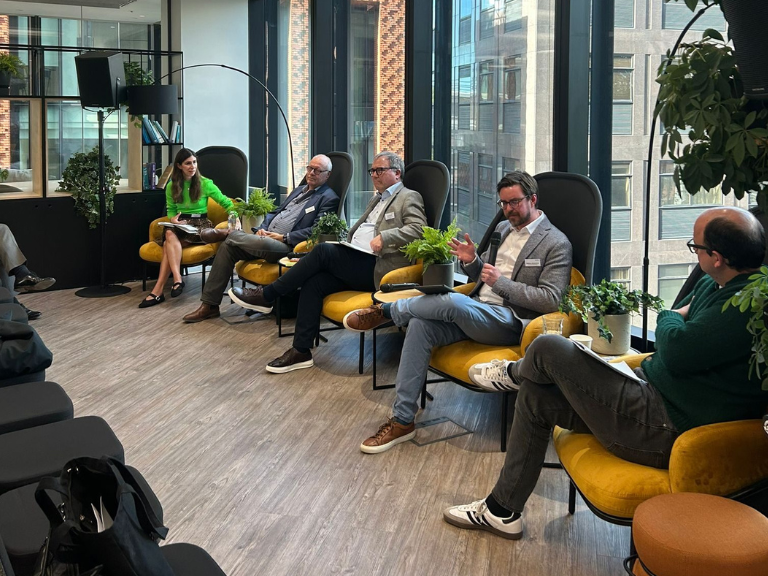
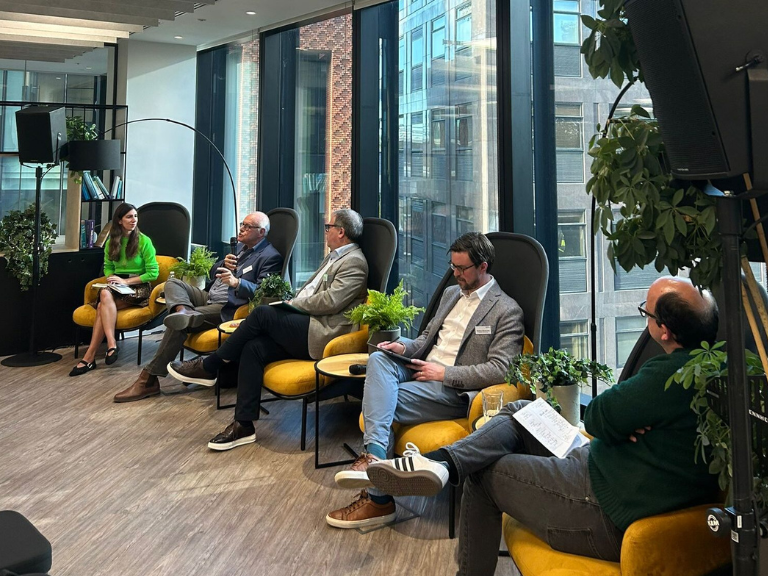
Against this backdrop, this IIC panel discussion will examine what cloud sovereignty should mean in a UK context: whether the EU definition is appropriate, what is realistically achievable at UK scale, and how far the UK is prepared to trade off strict sovereignty objectives against cost, innovation and competitiveness. It will examine how UK government policy on cloud and sovereign compute fits within the broader geopolitical landscape and what the CMA’s next steps on its cloud inquiry could imply for providers, enterprise users and regulators.
The discussion will also assess how far current commercial offerings, such as BT Sovereign Cloud and other similar initiatives meet immediate UK needs around data protection, jurisdictional control and operational resilience, and what gaps exist.
Panellists will explore what additional policy, regulatory and industry measures might be required over the longer term to strengthen the UK’s cloud sovereignty, including options for standards, certification, procurement levers and coordination between competition, data protection and sector regulators.
Questions for discussion include:
Kindly hosted by

Registration Fees for delegates
Tuesday 28 April 2026
IIC UK Chapter Meeting
IIC Members – Free
Non-Members – £25 GBP (excluding VAT *)
*VAT will be applicable for UK registrations only
If you feel the delegate fee may be a barrier to attending this event, please contact us at enquiries@iicom.org
Event Cancellation Statement



Please login to access the report, exclusive for delegates and IIC members only.
Download
John Midgley is Director of Public Policy for Amazon Web Services, covering the UK, Middle East and Africa. He joined Amazon in 2016 as one of the early members of the AWS Public Policy team and has helped build out the function. Prior to Amazon he worked at the US software company Intuit, focusing on policy issues in the UK and Canada, and earlier in his career worked in public affairs consulting.

Matthew McDermott is Director of Artificial Intelligence at Access Partnership, where he leads the firm’s work on AI governance, digital policy, and regulatory strategy. He advises technology companies, infrastructure providers, and industry organisations on navigating complex policy environments and engaging effectively with governments and regulators worldwide. His work focuses on translating emerging AI policy debates into practical strategies for companies operating across multiple jurisdictions. He regularly engages with policymakers and international organisations, including the European Union, the International Telecommunication Union, and the United Nations. He frequently speaks and moderates at international events on the governance and policy implications of emerging technologies.

Robert Mourik is Chairperson, the Commission for Communications Regulation (ComReg).
Mr Mourik has almost thirty years’ experience in the telecoms sector, as an industry executive and as Government official.
Prior to joining ComReg, he worked for Cubic Telecom, a new entrant in the automotive IoT space, where he was responsible for all wholesale activities. Robert spent almost 10 years in Telefonica as the European Regulatory Strategy Director at their corporate HQ in Madrid and as Strategy Director in Ireland.
He also worked for Vodafone Group, as its head of the Brussels Office and in the regulatory department in Newbury, UK.
In 1991, Mr Mourik began his career in the Dutch Department for Transport and Telecommunication and from 1994 until 1999 he served, as Telecom Attache at the Netherlands’ Permanent Representation in Brussels. He was a Member and Chair of the Council Telecoms Working Group in 1998 when the first telecom regulatory package was adopted.
Mr Mourik studied Economics and Public Policy at the Erasmus University in Rotterdam, and the University of Hull (UK).

Dr Stephen Unger was until recently a Board member of Ofcom, the UK regulator responsible for digital communications. He had various responsibilities, including setting regulatory strategy for the UK, representing the UK internationally, and leading Ofcom’s technology programme. For a period he was Acting Chief Executive.
Before becoming a regulator Dr Unger spent several years in the private sector. He worked for a variety of high-tech start-ups who were developing and exploiting new wireless technologies.
Dr Unger’s current focus, working as a non-executive board member, consultant, and academic, is on the practical implications of disruptive technology change.
Dr Unger also served as a International Institute of Communications Board Director 2017-2022.
For more background see www.linkedin.com/in/ungersteve. Dr Unger can be contacted at swunger@swunger.com

Tanya Filer, PhD, is Founder and CEO of StateUp, the platform of research, strategy, and training for governments and firms to shape the technology and energy transitions in a geopolitical age. Tanya is also Founding Editor-in-Chief of the Cambridge Forum on Technology and Global Affairs (Cambridge University Press) the new open-access, peer-reviewed journal for leading research and policy analysis on technological change and geopolitics. She established the Digital State programme at the Bennett Institute for Public Policy, a research unit of the University of Cambridge, where she lectures on public policy and technology policy.



We give innovators and regulators a forum in which to explore, debate and agree the best policies and regulatory frameworks for widest societal benefit.
Insight: Exchange: Influence
We give members a voice through conferences, symposiums and private meetings, as well as broad exposure of their differing viewpoints through articles, reports and interviews.
The new website will make it easier for you to gather fresh insights, exchange views with others and have a voice in the debate
Take a look Learn more about our updatesYou are seeing this because you are using a browser that is not supported. The International Institute of Communications website is built using modern technology and standards. We recommend upgrading your browser with one of the following to properly view our website:
Windows MacPlease note that this is not an exhaustive list of browsers. We also do not intend to recommend a particular manufacturer's browser over another's; only to suggest upgrading to a browser version that is compliant with current standards to give you the best and most secure browsing experience.