Australasia Digital Communications and Media Forum 2026
Digital Communications and Media Forum (DCM Forum)
Read this quarter’s Intermedia here
Tuesday 10 – Thursday 12 February 2026
We look forward to the first IIC Australasia Digital Communications and Media Forum taking place in 2026.
Tuesday 10 February
Regional Regulatory Roundtable
Kindly hosted by

There will be an invitation-only afternoon roundtable for regulators on the afternoon of 10 February, hosted and co-Chaired by the ACMA. It is the perfect opportunity to share, compare and benchmark approaches to digital transformation across Australasia and further afield.
Wednesday 11 – Thursday 12 February
Digital Communications and Media Forum
Through a combination of keynotes, panels and interactive roundtables we will be addressing the most pressing telecom, media and digital issues. See Key Themes list for further details.
Gold Sponsor

Reception Sponsor

Registration Fees for delegates.
Wednesday 11 – Thursday 12 February 2026
Australasia Digital Communications and Media Forum
IIC Members – Free
Non-Members – £295 GBP (excluding VAT *)
*VAT will be applicable for UK registrations only
** Please check eligibility to attend
If you feel the delegate fee may be a barrier to attending this event, please contact us at enquiries@iicom.org
Visas
The IIC will be pleased to provide a letter of invitation on request, but visas will be the responsibility of the event attendee.
Event Cancellation Statement
Connectivity & infrastructure:
Digital services & platforms:
Protecting communities:
Artificial intelligence:
Hotels
You can book hotels close to the venue using this link
The IIC accepts no responsibility for bookings made at any of the hotels and recommends that you check out the hotels on the internet before booking.
Visas
The IIC will be pleased to provide a letter of invitation on request, to support with visa applications – but visas will be the responsibility of the event attendee.
Explore visa requirements here

Andrew Ure leads Netflix’s public policy and government affairs team in Asia-Pacific, leading teams that engage with governments and institutions across Asia-Pacific, helping countries make the most of the creative economy.
Prior to this, he spent twelve years at Google where he held a number of senior leadership roles in Australia, Singapore, India, Japan and Hong Kong, and was the Managing Director of Google’s public affairs team in Asia-Pacific. He has also been the Managing Director of OgilvyEarth Australia, a sustainability consultancy in Sydney.
He has also spent a decade as a diplomat with the Australian Government. His recent focus was multilateral climate change negotiations, and he co-chaired the World Bank’s Forest Carbon Partnership. Between 2005-2008, he was posted to the Australian Embassy in Iran.
He has degrees from Oxford University and Australian National University, and lives in Singapore.

Annabelle is the CEO of ARIA and PPCA. She came to the music industry in February 2021 following a 16-year career in television at Network 10 where she most recently held the role of Chief Operating Officer looking after a range of functions including operations, corporate and government affairs, and strategy. Prior to Network 10, she spent several years working in government including four years in senior political roles for then Minister for Communications and the Arts, Senator the Hon. Richard Alston AO. Annabelle was a Council Member of the Australian Film, Television and Radio School (AFTRS) from 2018-2023 and was previously a board member of Save the Children Australia, Freeview Australia, and Free TV Australia. In 2019 Annabelle was invited to participate in the McKinsey Remarkable Women Program. Annabelle has a Bachelor of Laws and Bachelor of Arts (Asian Studies) from the Australian National University.

Ben joined Snap Inc’s Sydney office to lead Public Policy for Australia and New Zealand in September 2023. He previously led public policy for IGEA, the peak body representing the Australian and New Zealand video games industry. Prior to industry, Ben held a number of roles in the Australian Government, including working in online safety, classification, cyber policy, criminal justice and national security.

Ben Saint is Head of Government Affairs, Oceania at Nokia, based in Sydney. He brings over two decades of experience in government, having served as a political staffer and public servant across local, state, and federal levels in Australia – including as an adviser to the Minister for Communications. Earlier in his career, Ben worked in the not-for-profit sector, earning an Australian Honours Medal for his contributions. At Nokia, Ben leads engagement across Australia, New Zealand and the Pacific, advocating for public policy that supports innovation, investment, and sustainable digital infrastructure. His work includes collaborating with governments and other partners to advance trusted connectivity that supports socioeconomic outcomes in Pacific nations.

Brent Carey is the Chief Executive Office of Netsafe, New Zealand’s online safety charity. He has broad and extensive experience in regulatory, privacy, safety and justice environments along with a good understanding of both local and global online safety ecosystems. He was New Zealand’s second Domain Name Commissioner (2017 -2022) overseeing the .nz domain name space. He has worked for two Privacy Commissioners and an Australian Senator.
He has previously lived and worked in Australia holding senior positions at various integrity bodies, for example, the Australian Telecommunications Ombudsman, the Independent Broad Based Anti-Corruption Commission, the Victorian Institute of Teaching and the Victorian Privacy Commissioner’s Office.
Mr Carey serves on the Governance Committee of the Aotearoa New Zealand Code of Practice for Online Safety Harms adopted by Meta (Facebook and Instagram) Google (You Tube), TikTok, Twitch and Twitter. He is involved with several international bodies, including the International Council for Online Dispute Resolution and the Global Internet Forum to Counter-Terrorism. He is an Associate member of the Arbitrators and Mediators Institute of New Zealand and Member of Te Kotahitanga o Te Atiawa iwi, the indigenous peoples of Aotearoa (New Zealand). He is Co-Founder of Taranaki Agribusiness Green Meadows Beef.
He graduated from Victoria University of Wellington New Zealand with Law and Arts Degrees and has a Graduate Certificate in Alternative Dispute Resolution ( Industry) from Boxhill Institute of TAFE Melbourne, Australia.
Some of his recent collaborations include the development of Global Principles on Digital Safety: Translating International Human Rights for the Digital Context for the World Economic Forum, Project Dragon with the University of Swansea to develop Online Grooming Spotting Tools and Advisor to the University of Otago Department of Marketing on its Datification of Children Project ( 2023-2026). He is an industry representative of the Human-Centred Phishing Susceptibility Research programme, comprising of researchers and partners from The University of Auckland, Ngāti Whātua Ōrākei, Tainui Group Holdings, NIWA and ESR, Datacom. The research program is examining aspects of social engineering, psychology and cyber security to focus on the people side of phishing attacks.

Chris Hofer joined Amazon Leo in 2020 as Head, international spectrum management and strategy, with responsibility for spectrum policy and satellite coordination. An engineer by training, Chris leads Amazon Leo’s work at the International Telecommunications Union (ITU) in preparation for the World Radiocommunication Conference (WRC) and operator-to-operator satellite radio frequency coordination. He also leads Amazon Leo’s collaboration with astronomers and currently serves as the co-chair of the Industry and Technology Hub at the International Astronomical Union’s Centre for the Protection of the Dark & Quiet Sky from Satellite Constellation Interference. In 2021, Chris co-chaired the industry subgroups for the SATCON2 and Dark and Quiet Skies 2 astronomy conferences.
Before Amazon, Chris served as director of regulatory affairs for Viasat, representing Viasat’s satellite interests in the ITU’s Working Party 4A preparations for the WRC. He also served as the elected international chairman of ITU-R Study Group 4 for two terms, from 2012-2019.
Previously, Chris was the lead representative for WRC activities for the Chief Information Office of the Office of Secretary of Defense. Earlier he worked at the U.S. Department of Commerce, National Telecommunications & Information Administration (NTIA), acting as the chairman of the Space Systems Subcommittee under the U.S. interagency spectrum group, Interdepartment Radio Advisory Committee (IRAC).
He holds a master’s degree in telecommunications from the University of Colorado in Boulder and a bachelor’s degree in electrical engineering from New Mexico State University.

Edward Wee is a seasoned Online Trust & Safety leader with extensive experience in both the private and public sectors. He is currently the Director of Online Safety & Content Regulation at the Infocomm Media Development Authority (IMDA) of Singapore, where he leads the development and operationalisation of Singapore’s online safety and internet content regulations.
Prior to IMDA, Edward led Meta’s APAC Strategic Response and Content Policy teams from 2017 to 2021, where he oversaw whole-of-company responses to major complex geopolitical, regulatory and online safety incidents and crises, and developed product policies and operational processes for Meta’s family of apps.
From 2014 to 2017, Edward was BP’s APAC Head of Intelligence and Geopolitical Risk where he provided actionable strategic intelligence updates to BP’s Executive Leadership. Before that, Edward served in the Singapore Armed Forces for 12 years, during which he was the Military Assistant to the Chief of Army, a Branch Head in Army Intelligence, and a Company Commander, among other appointments.
Edward graduated from the University of Pennsylvania with a Bachelors in International Relations and History, and received his Masters in Political Science from Columbia University.
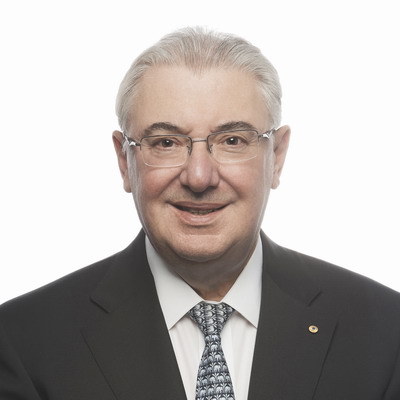
Ian Robertson is a corporate, media and regulatory lawyer who heads the media and communications practice of national law firm Holding Redlich. He is also the Chair of Holding Redlich. He became a partner of Holding Redlich in Melbourne in 1990 and established the firm’s Sydney office in 1994.
Ian has held a number of public and private sector Board appointments including President of the Board of the Victorian Government screen agency, Film Victoria, Deputy Chair of the Australian Government screen agency, Screen Australia, board member of the Australian Broadcasting Authority, director and Chair of Ausfilm, director and Deputy Chair of Film Australia Limited, and director of the ASX-listed screen production and distribution group, Beyond International Limited. He is a Fellow of the Australian Institute of Company Directors.

Jane van Beelen Joined nbn on 1 October 2020 and joined nbn’s Executive Committee from 1 September 2021. As Chief Legal & Regulatory Officer, Ms van Beelen is the General Counsel of nbn and leads the company’s legal and regulatory functions. She is responsible for the provision of legal and regulatory expertise to our board and executives, leading our engagement with regulatory stakeholders and facilitating legal and regulatory compliance. The Legal & Regulatory business unit also incorporates the company secretary and non-discrimination obligations compliance office.
A telco industry veteran, Ms van Beelen joined nbn following a 25-year career across the legal, regulatory and corporate affairs functions at Telstra, where she led the company’s regulatory strategy and engagement for ten years and played a leading role in numerous reforms and regulatory outcomes across the telecommunications industry in Australia. Most recently she led the compliance and regulatory affairs function, with responsibilities extended to the company’s compliance framework and compliance programs including ethical behaviour, regulatory and privacy.
Ms van Beelen was also inaugural chair of the GSMA Asia-Pacific Policy Group and a global Policy Group member, served on the Boards of TIO Ltd and AMTA, including two years as AMTA chair, and continues to serve as a Director of Communications Alliance.

Jean-Jacques Sahel was appointed Asia-Pacific Information Policy Lead at Google in November 2019, overseeing Google’s public policy approach in the region for issues including misinformation, online safety and intermediary liability.
He has been involved in international government and regulatory affairs for over 15 years in both the private and government sectors. Before joining Google, Mr Sahel was Managing Director of ICANN’s Brussels office and led the organisation’s corporate strategy and operations across the European region. He also led ICANN’s strategic plan for outreach, support and engagement with governments, private sector, and user groups throughout Europe, and worldwide for civil society.
Previously, Mr Sahel headed government and regulatory affairs for Skype, then digital policy at Microsoft for Europe, Middle-East & Africa regions. He had started his career in the City of London, before spending several years in the UK Government, leading in particular its international telecommunications policy.
Ex officio, Mr Sahel chaired the UK Chapter of the International Institute of Communications (IIC) from 2009-2019. He currently serves on the IIC’s Board and is Chair of the IIC Strategy Committee. He was a member of OSAB, the Advisory Board of UK communications regulator Ofcom for 2 terms until 2016. He has authored articles and research in both mainstream media and academic publications particularly on Internet policy and governance.

Julie Eisenberg is an independent consultant who has worked in senior roles in public broadcasting and public policy and as a lawyer for news media. She is the author of a report jointly commissioned by UTS Centre for Media Transition and the International Institute of Communications Australian Chapter, Finding the Way Forward for Australian News: An Examination of Local and International Interventions and the upcoming CMT report Funding the Way Forward for Australian News: A Review of Local and International News Funding Distribution Mechanisms. She is completing a PhD at UTS on the topic: Saving the News: The Dynamics of Regulating for a Sustainable Australian Media. She is also a past President of the IIC Australian chapter.

Kate Davies is Ofcom’s Group Director for Strategy and Research, leading its strategy and research work and engagement with domestic and international policymakers.
Kate joined Ofcom in 2016 working as both Strategy Director and Public Policy Director during that time. Prior to joining Ofcom Kate worked in the Treasury for six years in a range of Public Spending roles.

Bio coming soon…
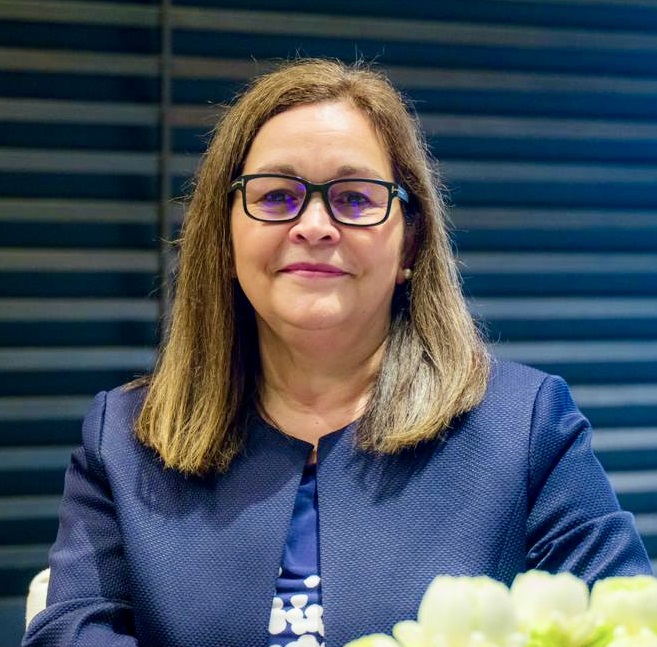
Lynn Robinson became Director General of the International Institute of Communications (IIC), in March 2020.
Lynn is an experienced senior director and trustee / non exec-director, having held key senior leadership positions in the technology, built environment, regulation, accreditation and dental industries. She has extensive experience of professional membership bodies working within the full spectrum including, Regulatory bodies, Industry associations and Chambers of Commerce. Lynn is a well-known and established ambassador in these areas having led on many strategic programmes to aid engagement, growth, retention, change management, stakeholder and political engagement.

Nerida O’Loughlin was appointed Chair and Agency Head of the Australian Communications and Media Authority from 14 October 2017, initially for five years. Nerida has since been reappointed until 13 October 2027.
Prior to joining the ACMA, Nerida was Deputy Secretary in the Australian Department of Communications and the Arts providing policy advice across telecommunications, broadcasting, online content and the arts. Nerida has also been responsible for major projects in the communications portfolio, including leading the Digital Television Switchover Program. Over her career, Nerida has also held senior positions in the Victorian and Commonwealth Governments, predominantly across the technology and cultural sectors.
Nerida is also an Associate Member of the Australian Competition and Consumer Commission and has been reappointed until 13 October 2027.
In 2019, Nerida was awarded an Australian Public Service Medal in the Queen’s Birthday honours for outstanding public service.

Bio coming soon…

Samantha Yorks has been appointed as a Full-time Member of Australian Communications and Media Authority (ACMA) on 28 August 2023 for 5 years.
Ms Yorke is an accredited mediator, technology lawyer and policy advisor with over 24 years’ experience working within the digital media and technology sectors both in Europe and the Asia Pacific.
Prior to being appointed as an ACMA Authority Member, she worked in Google’s Government Affairs and Public Policy team leading their privacy, online safety, scam and mis/disinformation efforts in Australia.
Ms Yorke established the regulatory function at the Interactive Advertising Bureau of Australia, worked as General Counsel AUNZ and Legal Director for Yahoo! Asia Pacific and spent 10 years working for Microsoft in London where she supported the MSN business through a period of exponential growth and contributed to the launch of the Xbox gaming console across Europe.

Chief Executive Stacey joined the BSA in September 2022. Stacey studied Law and English at Otago University and journalism at Massey University in Wellington. She worked as a reporter for the Dominion Post for several years before joining the legal profession, first in intellectual property law before going in-house. Before joining the BSA Stacey was a General Manager at Te Ao Rangahau Engineering New Zealand, overseeing the organisation’s legal, policy, public affairs and governance functions.

Dr Stephen P King commenced a 5-year term as a full time Commissioner with the Productivity Commission in July 2016. Stephen was reappointed for a further 5-year term as a part time Commissioner in January 2022. He was recently a Professor of Economics at Monash University in Melbourne where he also held the position of Dean of the Faculty of Business and Economics from 2009-2011.
Prior to joining Monash, Stephen was a Member of the Australian Competition and Consumer Commission (ACCC), where he chaired the Mergers Review Committee. Previous roles include, Professor of Economics at the University of Melbourne and a Professor of Management (Economics) at the Melbourne Business School.
Stephen’s main areas of expertise are in microeconomic theory, competition economics, regulation and industrial organization. His research has been published widely, including articles in major international economics journals.
Stephen is a Professor of Practice at Monash University, a member of the Academy of Social Sciences in Australia, a lay member of the High Court of New Zealand. He has a PhD in Economics from Harvard University. He received the Distinguished Public Policy Fellow award from the Economics Society of Australia in 2021 for his contributions to economic policy.

DIGI is led by Sunita Bose, who is its Managing Director. Sunita Bose was previously the Head of Global Policy for the online petition platform Change.org, based in San Francisco. She developed the company’s Privacy Policy, Terms of Service, Community Guidelines and policy infrastructure to manage harmful user-generated content, in areas such as bullying, hate speech, defamation, misinformation, data privacy and child protection.
Before that, Sunita spent seven years working in a range of international and Australian advocacy and strategic communications roles at humanitarian aid agencies Oxfam and UNICEF, and has a Masters of Policy from the University of New South Wales. A leading advocate for the tech sector and the democratising power of the Internet, Sunita sits on the Government’s Digital Experts Advisory Committee and her opinions have been published in The Australian, The Sydney Morning Herald and The Guardian.

Bio coming soon …..

Dr Tobias Schmid is Director of the Media Authority of North Rhine-Westphalia. He is also elected as the European Affairs Commissioner of the Conference of Directors of the German Media Authorities (DLM).
Dr Schmid is also Chairman of the Federal Media Committee of the German Music Council. Since 1st April 2021, he is also a Member of the Expert Committee for Communication and Information of the German UNESCO-Commission.
Dr Schmid holds a doctorate in law.

Tristan Gilbertson was appointed Telecommunications Commissioner in June 2020. He is a commercial lawyer with extensive international experience in telecommunications law and regulation. After an early career in private practice, Mr Gilbertson was appointed Legal & Regulatory Director – Asia-Pacific at Vodafone Group Plc, where he was closely involved in the expansion and diversification of Vodafone’s business. He then joined Telecom New Zealand Ltd where he was Group General Counsel and played a leading role in the structural separation of Telecom and the re-set of the regulatory framework in New Zealand. Most recently, he was Group General Counsel of Digicel Group Ltd, where he focused on transformation and change across Digicel’s 32 global markets.
Mr Gilbertson holds a BA/LLB(Hons) from the University of Auckland and has completed the Executive Leadership Development Programme at the Wharton School of the University of Pennsylvania. Mr Gilbertson chairs the Commission’s Telecommunications Division and Fibre Regulation Division, and is a member of the Consumer Division, Retail Payments System Division, Groceries Division, and Market Studies Division.



We give innovators and regulators a forum in which to explore, debate and agree the best policies and regulatory frameworks for widest societal benefit.
Insight: Exchange: Influence
We give members a voice through conferences, symposiums and private meetings, as well as broad exposure of their differing viewpoints through articles, reports and interviews.
The new website will make it easier for you to gather fresh insights, exchange views with others and have a voice in the debate
Take a look Learn more about our updatesYou are seeing this because you are using a browser that is not supported. The International Institute of Communications website is built using modern technology and standards. We recommend upgrading your browser with one of the following to properly view our website:
Windows MacPlease note that this is not an exhaustive list of browsers. We also do not intend to recommend a particular manufacturer's browser over another's; only to suggest upgrading to a browser version that is compliant with current standards to give you the best and most secure browsing experience.